Coastal building
The house that faces the sea
Salt, wind and light do things to a building that no inland specification survives.
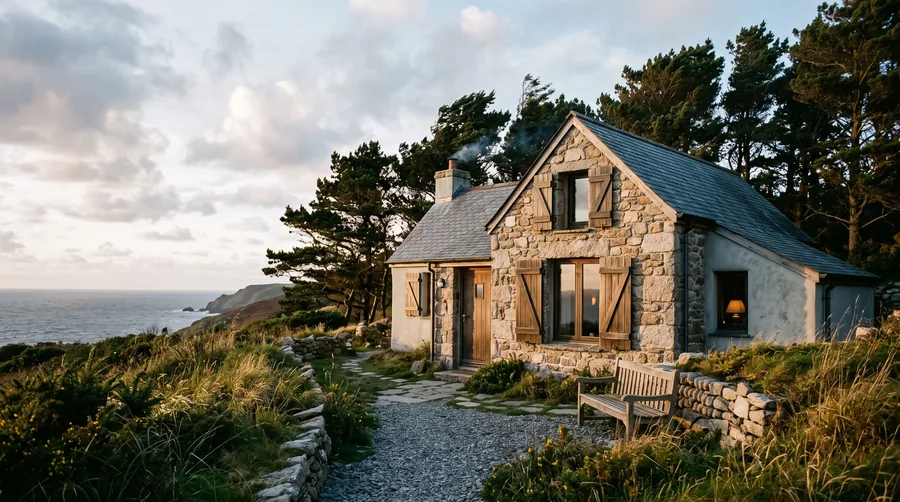
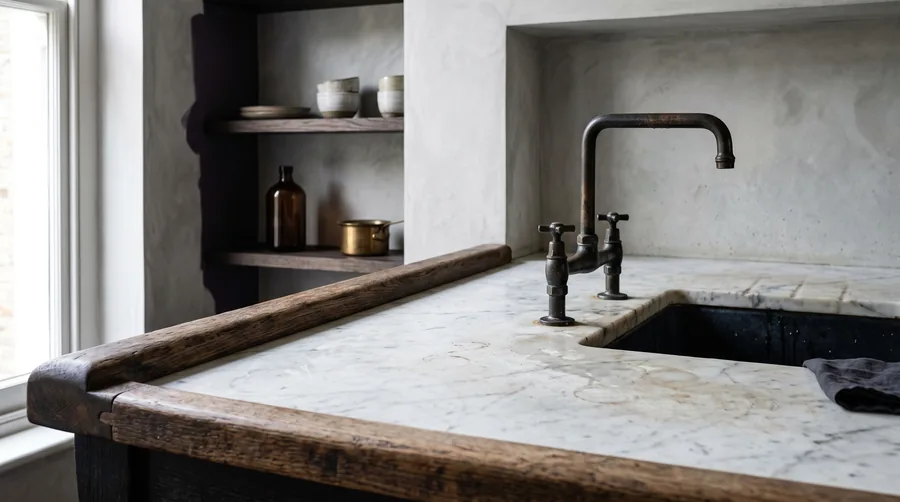
The first coastal house anybody builds fails in the same three places: the hardware, the glazing seals and the paint on the western elevation. All three fail within four years and all three were specified by somebody who has only ever built inland.
Salt is a different climate, not a worse one
Within about three hundred metres of breaking water, salt aerosol coats everything permanently. It is hygroscopic, so it holds moisture against the surface even on a dry day, and it attacks the passive layer on stainless steel. A 304 stainless handle that would last forty years in Munich pits and weeps rust stains down a wall in eighteen months in Cadiz.
The wind decides the plan
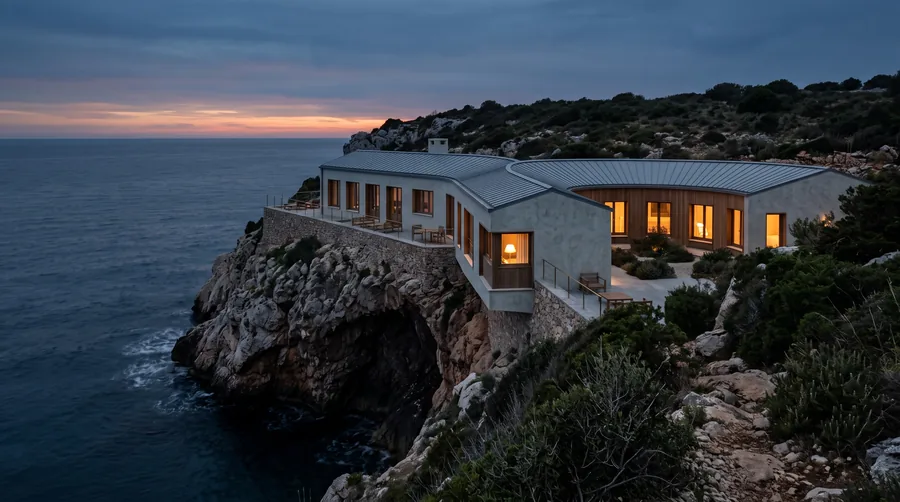
Sea-facing houses are designed for a photograph taken on a still day. In practice, a coastal site has a prevailing wind for two thirds of the year, and any outdoor space facing it is unusable for most of that time. The terrace that gets used is nearly always the one tucked on the leeward side, which is also the one with no view, which is why the best coastal houses have two.
Find out the prevailing direction before the plan is drawn, from the neighbours rather than from a wind rose, and take one lower-value room out of the view to shelter a courtyard. The courtyard will be the most used space in the house.
Light off water
Water reflects light upward, which means a sea-facing room gets a second source hitting the ceiling. It is the reason coastal interiors glow, and the reason they are almost impossible to keep comfortable without shading: the light is coming from below the overhang.
The answer is the same as everywhere on a west elevation: something vertical, outside the glass, that can be moved. Fixed louvres solve the summer and darken the winter. Sliding or folding shutters solve both, and they are the detail every good coastal house in Europe has had for four hundred years.
Which rooms go on the water
The instinct is bedrooms, and it is wrong. A bedroom on an eastern or southern sea gets full light at five in the morning from May to September, and the sea is not quiet at night. The rooms that reward a sea view are the ones used in the late afternoon and evening: the living room, the kitchen, one terrace, and the bath, which is the one genuinely great use of a sea-facing window.
Put the bedrooms on the courtyard side, dark and sheltered, and give each one a small opening towards the water rather than a wall of it. The house will be better to live in and worse to photograph, which is the trade that runs through all of this.