 Collecting
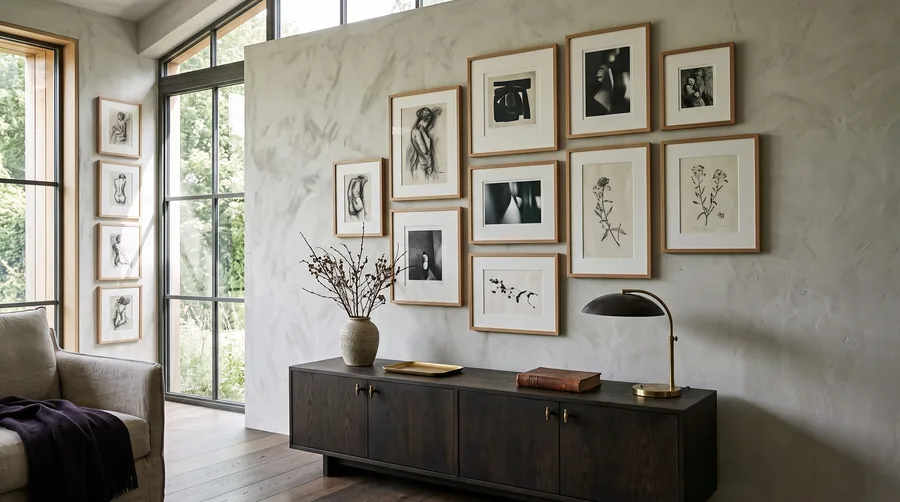
The gallery wall that is not a grid
The rule is that the gaps should be equal, not the frames. Everything else follows from it.
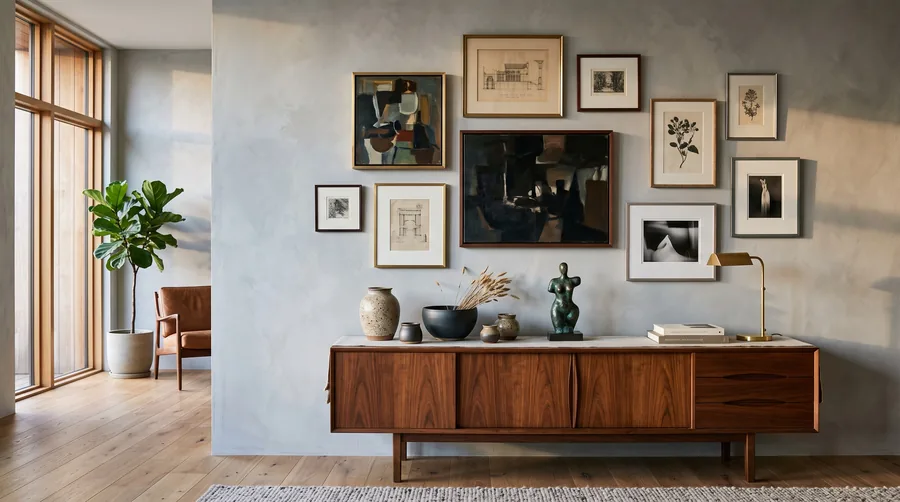
What stays
Collecting is about buying things that will still be right in twenty years: how to start a wall, what a piece of design is actually worth, and why the best collections in the world are narrow.
Collecting
The rule is that the gaps should be equal, not the frames. Everything else follows from it.
 Collecting
Twenty shows before the first purchase, and a rule narrow enough to say no to nine good things.
 Collecting
Original production, documented, unrestored, with provenance. Miss any one of the four and the number halves.
The short version
The collections worth looking at are the ones with a rule. One material, one decade, one city, one subject. The rule does two things: it makes you say no to nine good things, and it makes the tenth mean something in the company of what you already own.
The opposite is a house full of the best of everything, which reads as a showroom. Objects need neighbours they can argue with.
On value, the honest position is that almost nothing you buy for a house is an investment. Design classics track inflation at best, art is a market you are not in, and the resale on anything with an interior designer's markup is brutal. Buy because the thing is good and you want to look at it. If it appreciates, that is a fact you learn later.
Worth knowing
The house vote
Use it now
Gallery Wall
Lay out a wall of frames with the gaps equal and the group centred at 150.
Questions people ask
Go to twenty shows before buying once. Buy from a gallery that answers questions plainly, at a price that would not upset you if the artist vanished. The first mistake is the tuition fee.
Reissue, unless the original is in genuinely good condition and documented. An unrestored original with a broken frame is a project, not a chair.
Works on paper, photographs, anything with organic pigment, and any textile. UV film on the glazing buys years, not decades.
At the point where you are spending more on one work than on a car, yes, and mostly for what they stop you buying.
The Saturday letter
One letter a week: the new long read, one room worth studying, one number worth knowing. No advertising, no tracking, one click to leave.