Materials
The materials that age well
Some surfaces improve for thirty years. Others look tired in eighteen months. The difference is predictable.
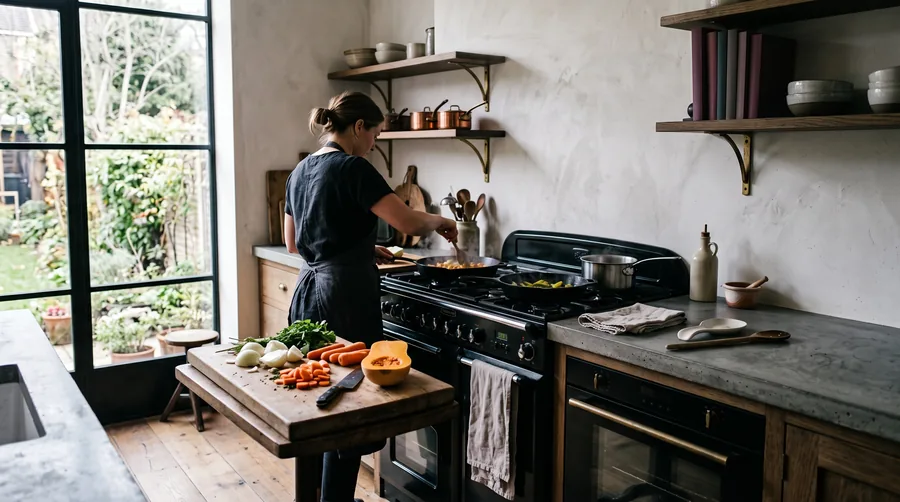
The test of a material is not how it looks on the day it is installed. It is what happens to it after four thousand people have touched it, a decade of sun has hit it and somebody has put a hot pan down on it without thinking.
The rule
Materials that age well are the ones where wear is indistinguishable from the material itself. Solid oak wears to oak. Brass wears to darker brass. Lime plaster wears to slightly thinner lime plaster. Everything is the same substance all the way through, so damage reads as history.
Materials that age badly are layered. A veneer, a lacquer, a foil, a coating, a plated finish. When the top layer goes, what is underneath is a different colour and a different substance, and the eye reads it instantly as damage rather than patina. This one distinction predicts almost every disappointment in a five-year-old interior.
The stone argument
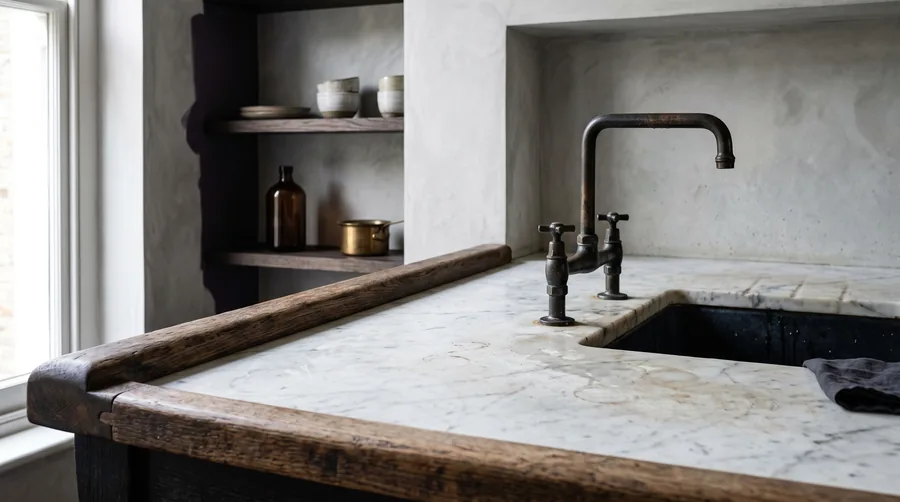
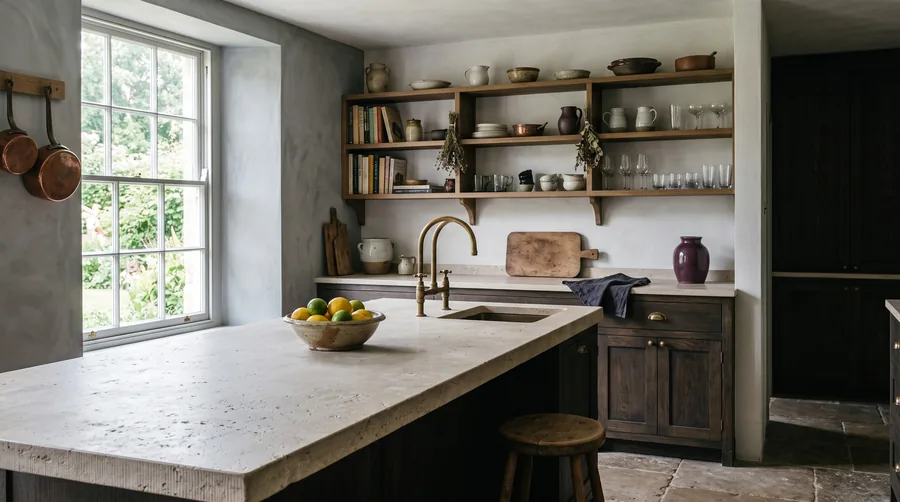
The objection to marble in a kitchen is that it etches and stains, and the objection is correct. Lemon takes the polish off in seconds and olive oil leaves a shadow that may or may not fade. What the objection misses is that this happens across the whole surface within about two years, at which point it is uniform and looks like a marble worktop in a house in Europe, which is to say it looks right.
A marble top that has been protected for ten years and then gets one bad mark looks worse than one that was never protected at all. Either commit to the patina or use quartzite, which is genuinely hard, genuinely stone and does not do any of this.
Floors, ranked by how they look in year twelve
- Solid oak, 20 mm, oiled: sandable three or four times, repairable in one board, and better at twelve than at one. The most expensive first and the cheapest across thirty years.
- Limestone or travertine: takes on a polish where people walk, which is the effect everyone wants and nobody can specify. Cold underfoot without heating.
- Terracotta: the warmest floor there is and the most forgiving of everything. Needs sealing and needs a house that suits it.
- Engineered oak with a 4 mm wear layer: honest, stable over underfloor heating, sandable once. Below 4 mm it is a laminate with a nice biography.
- Large-format porcelain: indestructible, entirely inert, and it will look exactly the same in year twelve, which is either the point or the problem.
- Dark stained oak: shows every speck of dust and every scratch as a pale line. Beautiful for about two years.
Metal, and the mistake with brass
Unlacquered brass darkens, gets fingerprints, goes brown around the handle and eventually looks like the door furniture of a good old hotel. Lacquered brass stays bright until the lacquer wears through at exactly the point everybody touches, and then has a bright ring around a dull patch forever. The cheaper option is the one that ages.
The same logic applies to bronze, copper and nickel. The only metals that should be sealed are the ones where corrosion is structural rather than cosmetic, which in a house is almost nothing.