A room reads as wrong for reasons guests can feel and cannot name. Almost all of them are measurements.
Interiors8 min read
Two rooms, the same budget, the same furniture, the same architect. One is photographed for a decade and the other is redone after four years. The difference is almost never the choices. It is the distances between them.
The numbers that are not negotiable
These are not style rules. They come from how far a person can reach, how wide a shoulder is, how the eye reads a horizon line, and they hold across every period and every taste.
Coffee table to sofa
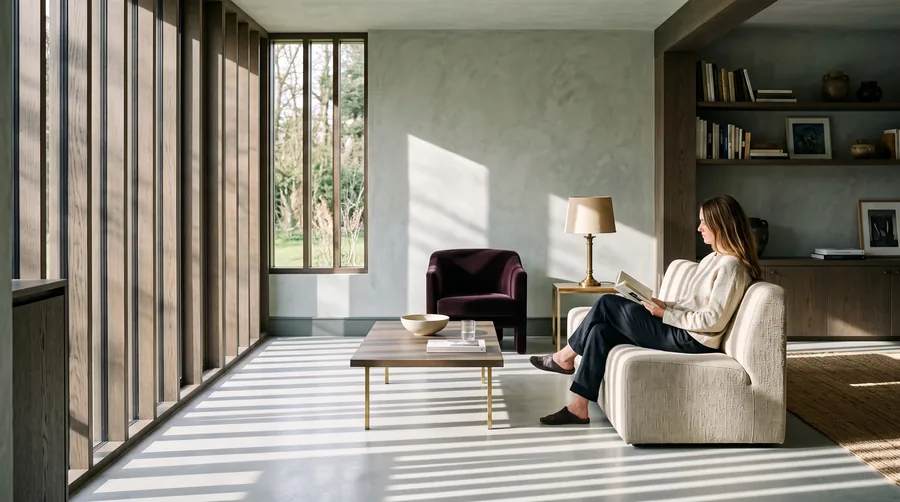
35 to 45 cm. Closer and you cannot get past, further and you cannot reach a glass
Coffee table height
level with the seat cushion, or up to 3 cm below. Never above
Rug under a seating group
under the front legs at minimum, under all legs where the room allows
Rug to wall
stops 20 to 30 cm short. Wall to wall is a carpet, which is a different decision
Pendant over a table
underside 75 to 85 cm above the top
Art centre height
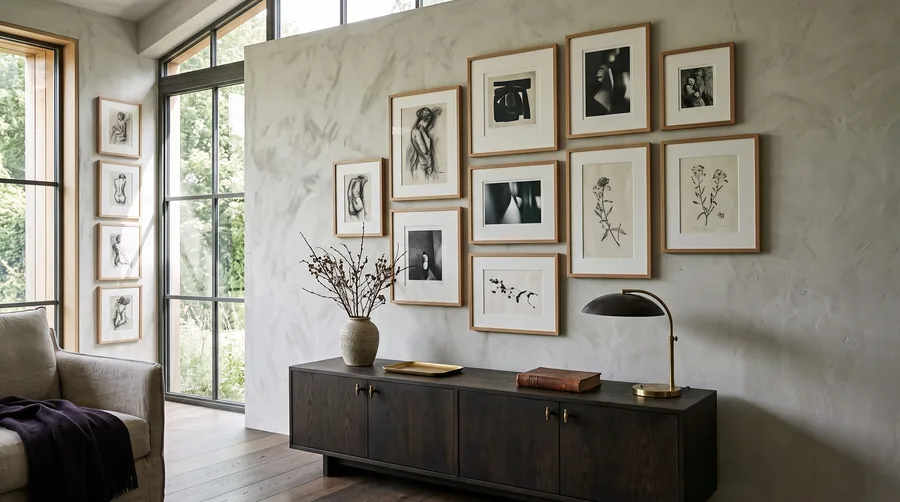
145 to 152 cm from the floor
Art over a sofa
bottom edge 20 to 25 cm above the back, width 60 to 75 per cent of the sofa
Main walkway through a room
90 cm. Secondary route 75 cm. Below 60 cm people turn sideways and stop using it
Dining seat width
65 cm per person, 70 with arms
Chair pulled back from a table
90 cm of clear floor behind it
Bedside table
level with the top of the mattress, plus or minus 5 cm
Television centre from a seated eye
at eye level, not above a fireplace, whatever the room wants
Why the sofa should not be against the wall
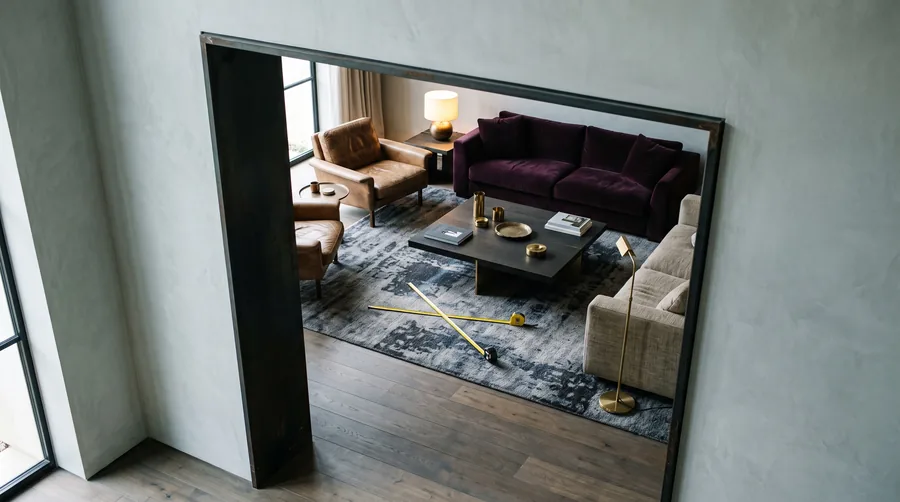
In a room over about four and a half metres wide, pulling the main seating twenty to thirty centimetres off the wall does something disproportionate: it turns the wall into a surface behind the group rather than the back of the group, and it lets a console, a lamp or nothing at all sit in the gap. The room gains a layer.
In a room under four metres it does the opposite and simply eats the walkway. This is the one place where the honest answer is that it depends, and the deciding number is whether you still have 90 cm to walk.
Height, and the thing nobody does
Most rooms are furnished entirely between 40 and 90 centimetres. Seat, table, console, sideboard, and then a jump to art at 150. The band between 90 and 150 is empty, and it is the band at standing eye level, which is where people are when they first walk in.
Fill it and the room resolves. A tall lamp, a leaning mirror, a plant with height, a piece of furniture that is 120 rather than 80 high. It is the cheapest correction available and it is the difference between a room that looks arranged and one that looks laid out.