Palette
The colour question
Why the white you chose looks grey, and how to build a palette that survives the seasons.
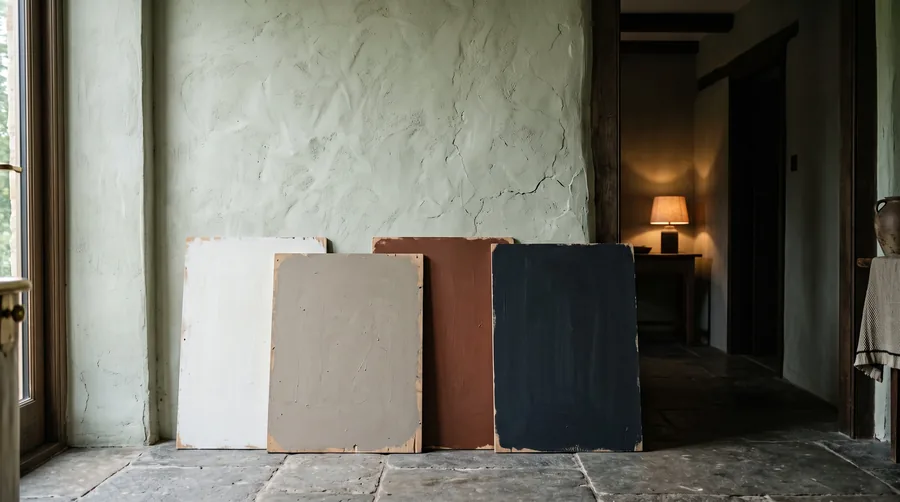
A colour is not a property of paint. It is what happens when a particular light hits a particular surface next to particular other surfaces, and change any one of the three and you have a different colour. This is why the sample that looked perfect in the showroom looks like a hospital corridor on your north wall.
Three things paint does that catch people out
It picks up the light it is given
North light is blue. A warm white under it goes grey and slightly sad. South light in summer is neutral to warm and will push the same white towards cream. West light at six in the evening turns everything apricot for forty minutes. A single white through a house will therefore read as four different colours, which is either the reason to use one white everywhere or the reason not to, depending on whether you want the house to feel unified or each room to feel resolved.
It picks up what is next to it
A pale wall next to a large expanse of green garden takes a green cast. Next to a terracotta terrace it warms. Next to a big oak floor it goes yellow. Colours are chosen on a card held in the air and then live surrounded by five other things.
It changes with sheen more than with pigment
The same colour in matt, eggshell and satin reads as three different depths. Matt absorbs and looks denser, satin reflects and looks lighter and harder. On a large wall in a bright room the sheen decides more than a step or two of pigment would.
A palette that works, in four parts
The formula that survives contact with real rooms is not a colour wheel. It is a hierarchy by area.
Whites, plainly
There is no such thing as a neutral white in a real room. Every white leans, and the useful question is which way and how far.
The colour that appears twice
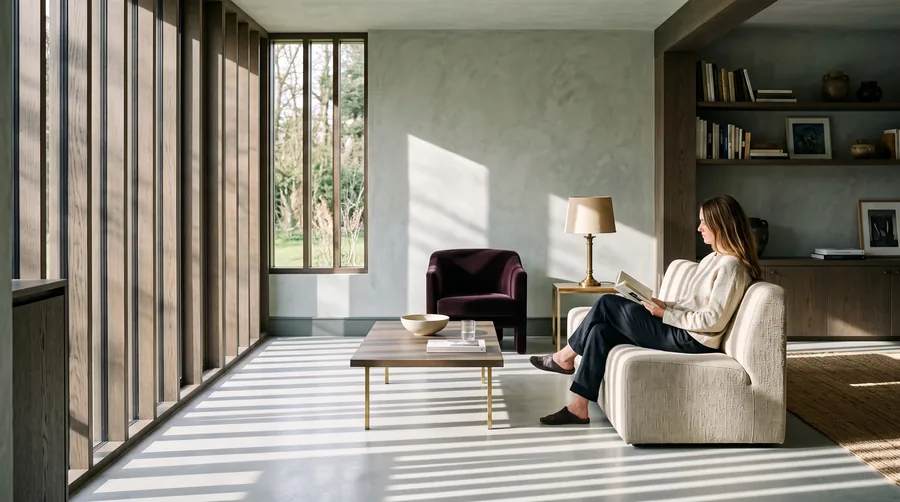
One saturated colour per room, appearing in exactly two places, is the move that separates a decorated room from a beige one. Two is the number because once reads as an accident and three reads as a scheme. The two placements should be different in size and different in material: a large chair and a small stack of books, a curtain and a lampshade, a painting and a cushion nobody planned.
When people say a room is brave, this is usually all they mean.
Use it now
Palette Studio
Build a four-part palette against the light your room actually gets.