Evening light
The house that goes quiet
What a good house does after ten at night, and the three circuits that do it.
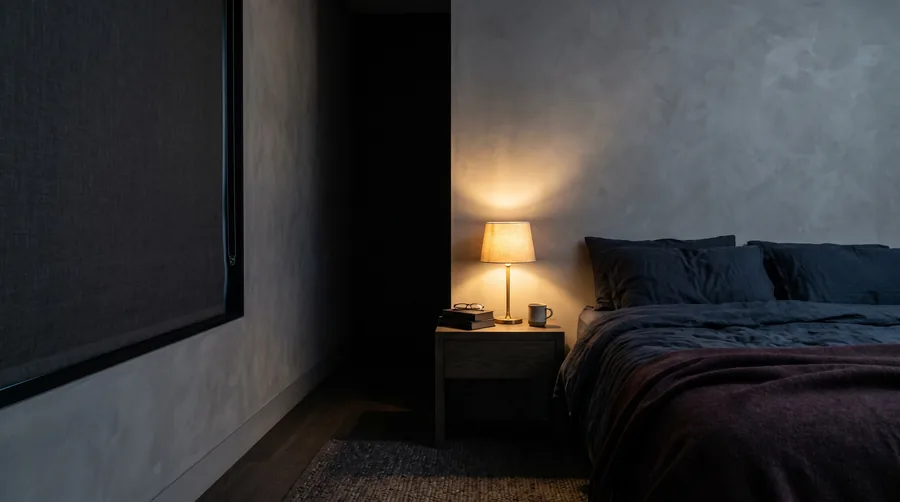
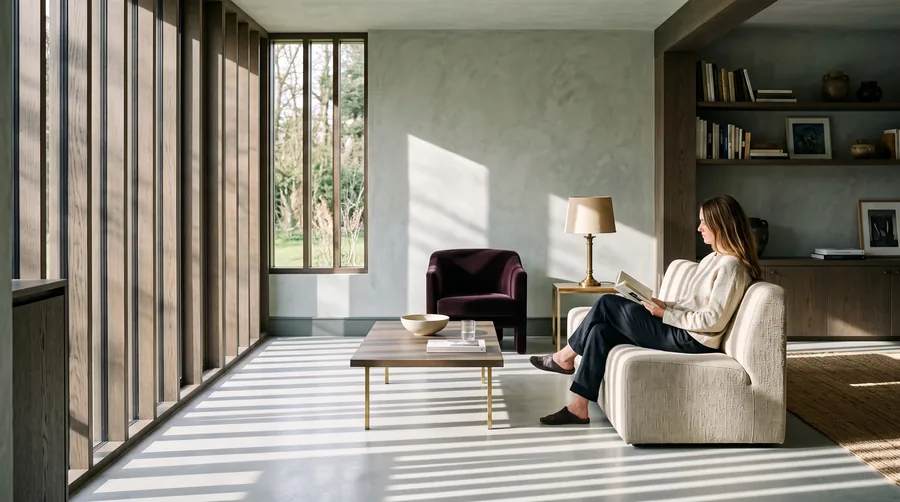
A house has two personalities and most only have one designed. The daytime house is about daylight, view and material. The night house is about pools of warm light in a dark room, and it is built entirely from decisions made at first fix.
The three layers
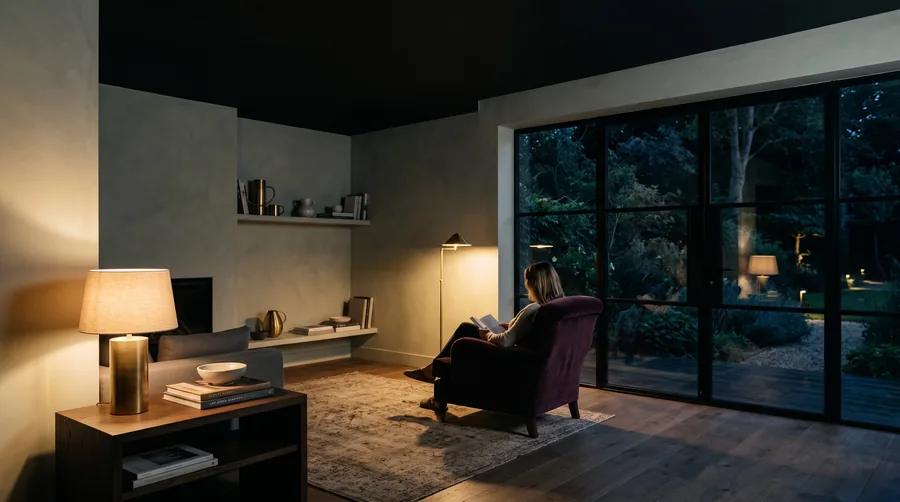
Every room that works at night has light at three heights, and the ratio between them is what makes the room feel calm rather than lit.
The default in new houses inverts this: bright at high level, nothing in the middle, nothing low. It produces an evening room that feels like a shop after closing, and no amount of dimming corrects it, because dimming a ceiling grid gives you a dim ceiling grid.
Scenes, without the system
Full home automation is not needed. Three switchable states per main room, each on a dimmer, does almost everything a controlled system does:
Warm dim, and why the good rooms have it
Incandescent light got warmer as it dimmed, from 2700 K down to about 2000 K, which is why a dimmed old lamp feels like candlelight and a dimmed LED often feels like a dull white light. LED drivers that reproduce this behaviour are sold as warm dim or dim to warm, and they cost roughly twenty per cent more.
In the two or three rooms used after dinner, this is the highest-value twenty per cent in the whole electrical specification. In a corridor or a utility room it is money wasted.
What to light outside
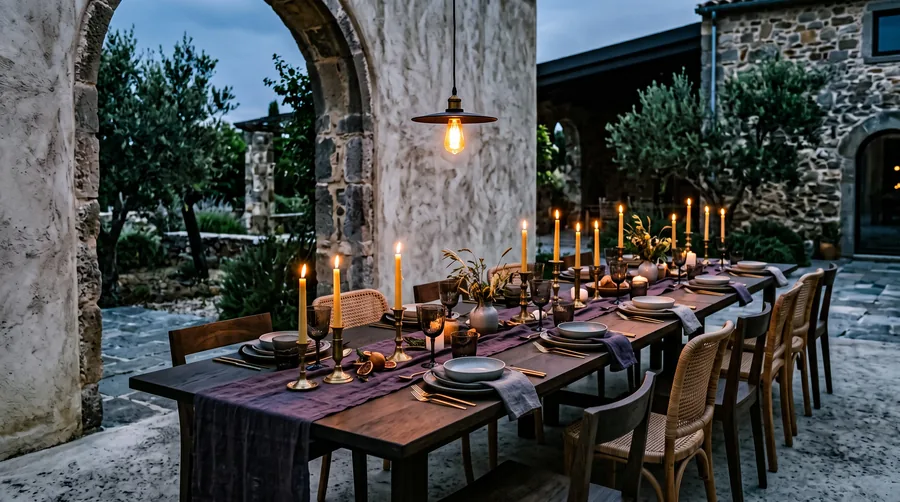
Once the interior is dim, the windows stop being mirrors and the garden becomes part of the room, which requires almost nothing: one uplit tree at distance, one low light on a wall, nothing near the glass. A garden lit brightly close to the house does the opposite and turns every window into a black rectangle with a reflection of the lamp in it.
Use it now
Light Plan
Lumens, colour temperature and how many fittings a room needs at three heights.