Hosting
The table for twelve
Hosting well is a logistics problem with a warm face on it. The good hosts have solved the logistics.
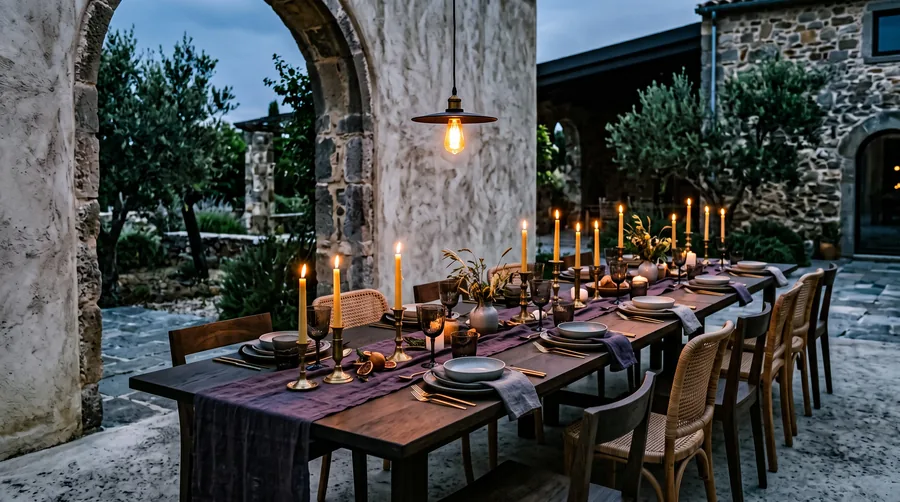
The difference between a dinner people remember and one they enjoy politely is not the food. It is whether the host sat down, and whether the person at the far end of the table had somebody to talk to.
The numbers of a table
Why twelve is harder than eight
Up to about eight, a table is one conversation. Above ten it is always two or three, and the host's job changes from keeping the conversation going to making sure each cluster has somebody who can carry it. This is the entire art of a seating plan and it has nothing to do with couples or seniority.
Put the two people who talk most at opposite ends. Put the quietest person next to the funniest. Split every couple. And accept that at twelve, whoever sits in the middle of a long side has the best evening and whoever is at a corner has the worst, so give the corners to people who know each other.
The host who sat down
Every dinner that people describe as effortless was one where the host was at the table from the first course. This requires one decision made two days earlier: that the menu contains at most one thing that needs attention after the guests arrive.
Everything else is cold, room temperature, braised, roasted at a fixed time, or bought from somebody who is better at it. A host in the kitchen at nine o'clock has already lost the evening, however good the food turns out to be.
The light
Dinner light is one pendant low over the table on a dimmer, at about twenty per cent, plus candles, plus one warm lamp in the corner of the room so the space beyond the table does not go black. Downlights should be off entirely.
The single most common failure at a beautiful table is a pendant hung at the height that looked right in the drawing, so that everybody at the table is looking at a bulb, or a run of spots that puts a shadow under every eye. Test it by sitting down. It is the only test.