Sleep
The dark bedroom
The most expensive bedrooms in the world fail on three details, and all three are about light.
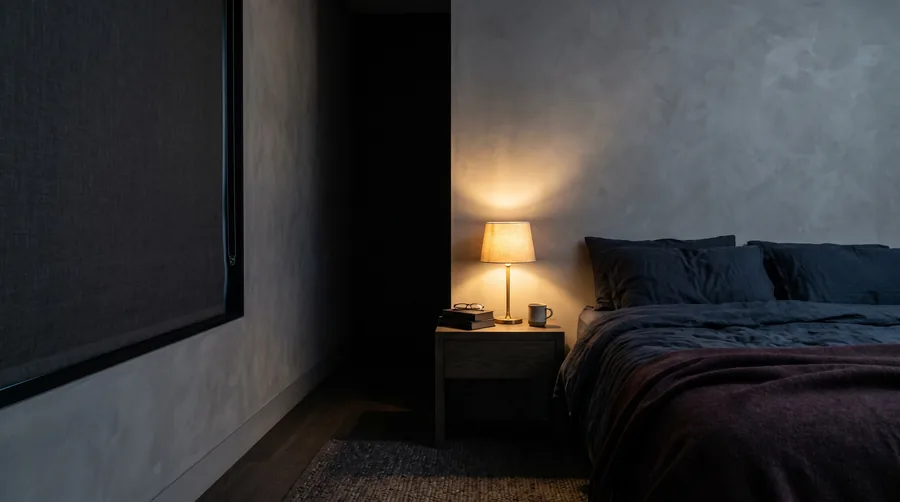
Blackout is not a fabric. It is a detail, and it fails at the edges. A four thousand euro motorised blind fitted inside the reveal without side channels is worse at keeping light out than a cheap roller blind fitted outside it, and both are in bedrooms that cost a fortune.
Where the light gets in
Fix them in that order. A blind with proper side channels and a closed box is dark. Everything else is dim.
Two circuits, two dimmers, one switch
A bedroom needs exactly two lighting circuits. One for getting dressed, bright enough to see what colour something is, which is a ceiling or wall source. One for the last twenty minutes, which is warm, low and at or below eye level, and which does not light the ceiling at all.
Both on dimmers, and both switchable from the bed as well as from the door. That last part is the detail that separates a hotel room from a house, and it is the one that is left out of most renovations because it needs a cable run at first fix.
The other things
Temperature: seventeen to nineteen degrees is where most people settle, and a bedroom that cannot be cooled independently of the rest of the house is a bedroom that is too warm from March.
Sound: a bedroom on a corridor with a hard floor hears everything. The fixes are a solid core door, a seal, and a rug outside rather than inside. The most common mistake is treating the room and not the approach to it.
Air: a window that opens on the quiet side. Air conditioning that runs all night dries everyone out and is the reason people wake at four in expensive hotels.
Use it now
Light Plan
Lumens, colour temperature and how many fittings a room needs at three heights.